Ephesus: plan an ancient-city visit around the walking route

Ephesus preserves impressive remains of an ancient city, with streets, public buildings and other structures that can help visitors imagine its former scale. The site is large enough that planning the walking route matters.
Read the route before entering
Check the actual entrances and whether your transport arrangements work from the exit you intend to use. Choose a few features you most want to understand, and allow time to read interpretation. Some areas may have separate access requirements or tickets.
Prepare for exposed surfaces
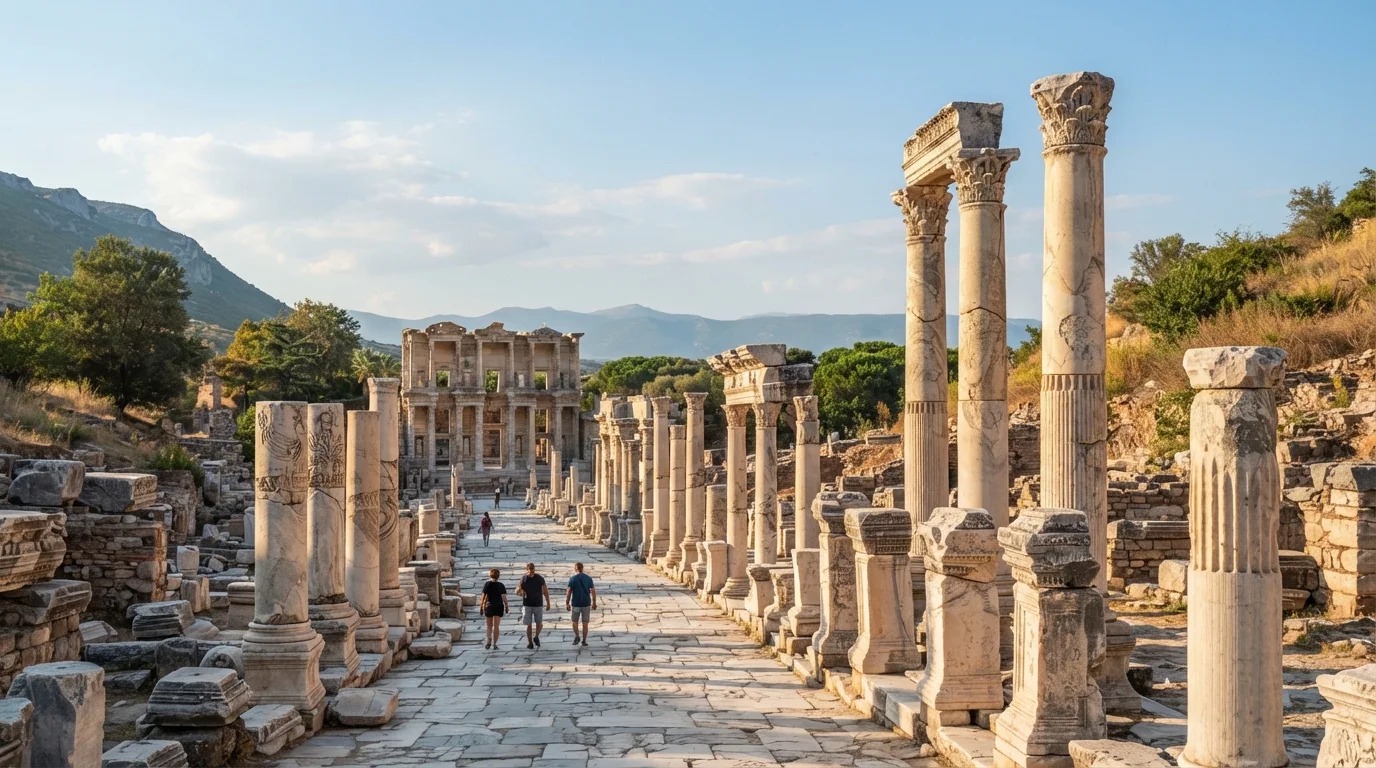
Stone streets, uneven surfaces and limited shade can make a visit demanding, especially in hot weather. Carry water and suitable shoes, and follow marked paths. If mobility is a concern, confirm current access information. Do not add several distant archaeological stops without allowing for the physical effort of the first one.
Understand the ancient city's main walking sequence
Ephesus near Selçuk has a substantial archaeological visitor route, including recognizable structures such as the Library of Celsus and the Great Theatre. Begin with the official site map and identify the entrance and exit you intend to use. The route includes exposed stone surfaces, changes in level and limited shade. A visit focused on the main streets and public buildings can provide a useful introduction to the ancient city's organization, even if you do not explore every optional area.
The Terrace Houses offer a more focused look at domestic architecture and decoration. Check their current admission and accessibility arrangements separately; the main site ticket may not cover every visit or route. If mosaics, frescoes and daily life are of particular interest, allow more time for interpretation rather than rushing from one structure to another.
Decide how Selçuk fits into the day
The Ephesus Museum in Selçuk can provide context for objects and archaeological finds, while other regional sites offer different historical perspectives. Verify their opening arrangements and the actual transport between them. If the archaeological city is your main priority, avoid scheduling several major visits immediately afterward. Carry water, use suitable shoes and plan a rest before the return trip. In hot conditions, shorten optional sections and follow official site advice. If using a tour or transfer, confirm where you will be collected, especially when entering and leaving at different points. The ancient streets are easier to appreciate when the walking route, transport and available energy are planned together.
Images are generated editorial illustrations. Confirm current access, schedules and conditions before traveling.